Spotlight




SPOTLIGHT
The Hilarious Rise of Shafi Hossain: A Bangladeshi Stand-Up Comedian in New York
April 1, 2023


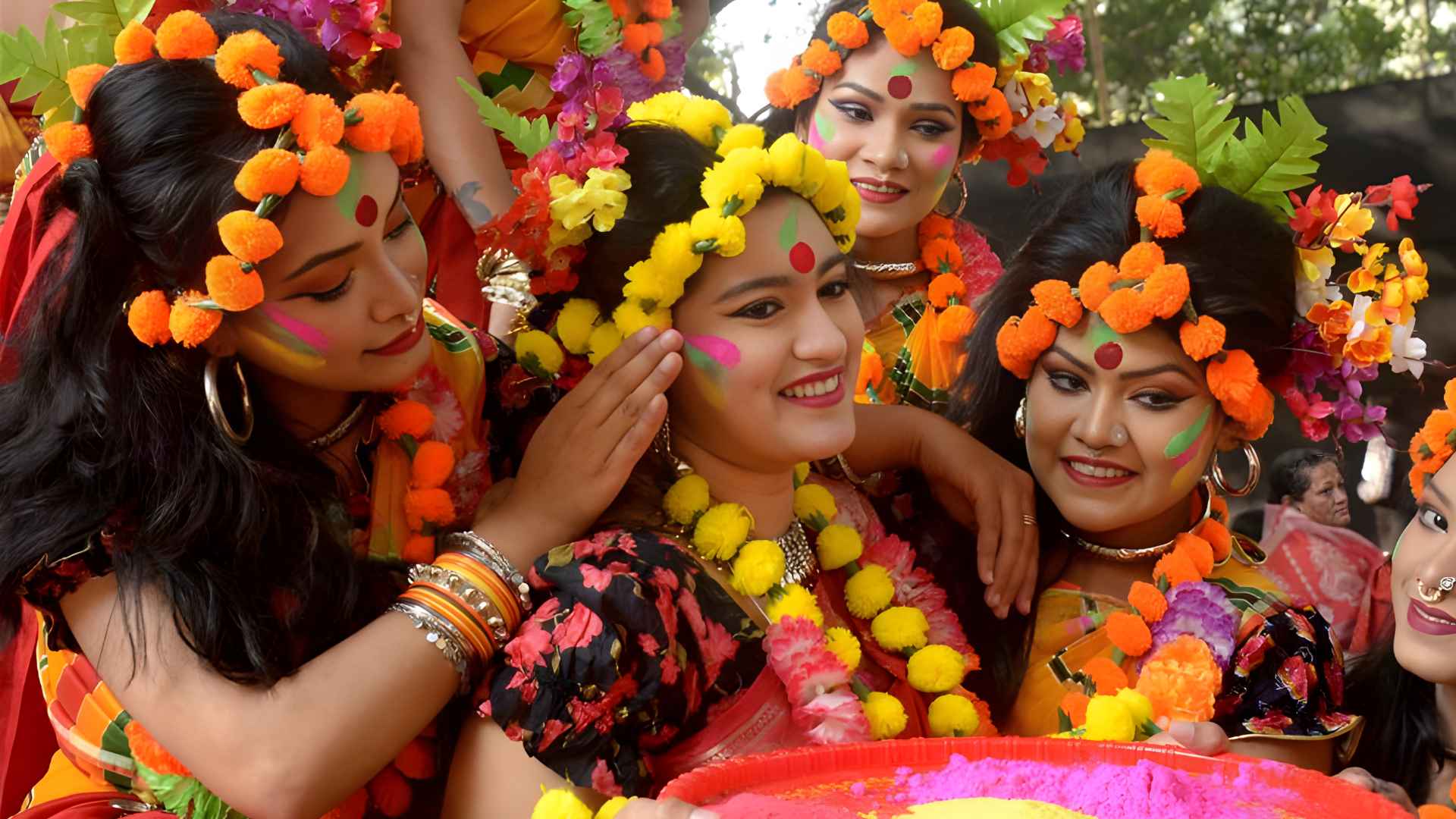
Pahela Falgun is more than the first day of spring—it is the rhythmic heartbeat of Bengali culture. As winter fades, Bangladesh transforms into a canvas of gold and red, welcoming Rituraj (the King of Seasons). The festival bridges nature’s renewal with a deep-rooted cultural identity that binds the nation together.
The historic Bakultala at Dhaka University became the heart of the first modern celebration. What began as a small campus gathering quickly grew into a nationwide movement that came to symbolize resilience, creativity, and cultural pride.
| Feature | Details |
| 🗓️ Date | 14th February |
| 💛Primary Color | Bashanti (Yellow) |
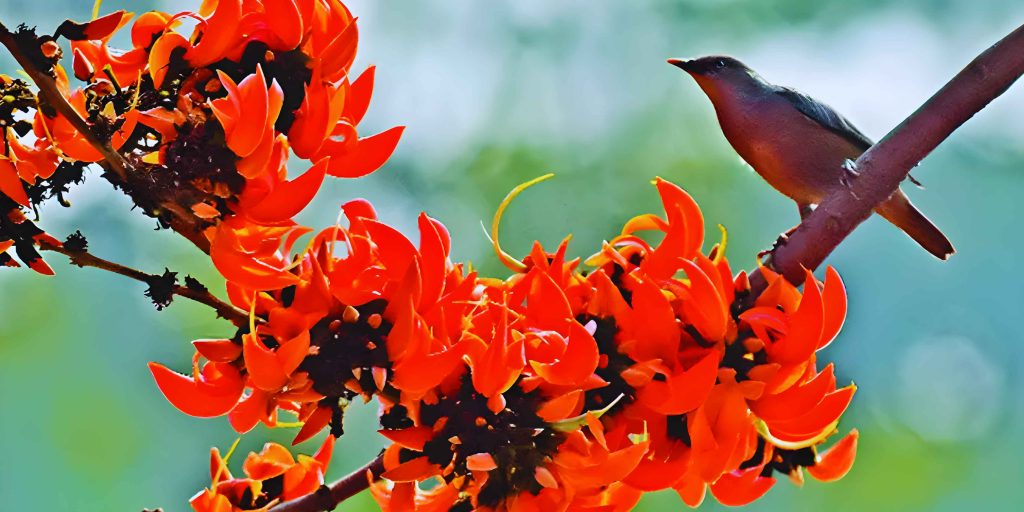
| 🌼Floral Symbols | Palash, Shimul, Marigold |
| 🎉Heart of Celebration | Charukala, Dhaka University |
| 🍽️Traditional Food | Pitha, Khoi, and Murala |
| 🐦Key Bird | Kokil (Cuckoo) |
ADVERTISEMENT
The roots of Pahela Falgun lie in the rural Bengali tradition of Boshonto Utshob, where communities have celebrated spring for centuries. However, the urban version we recognize today began in 1991 as an artistic and cultural movement.
During a period of political transition, students and teachers of Dhaka University’s Faculty of Fine Arts (Charukala) organized the first large-scale celebration under Bakultala. Their goal was to create a secular festival that transcended religious boundaries and centered purely on Bengali heritage.
What started as a local campus event soon spread across Bangladesh, becoming a symbol of cultural resistance, unity, and creative freedom.
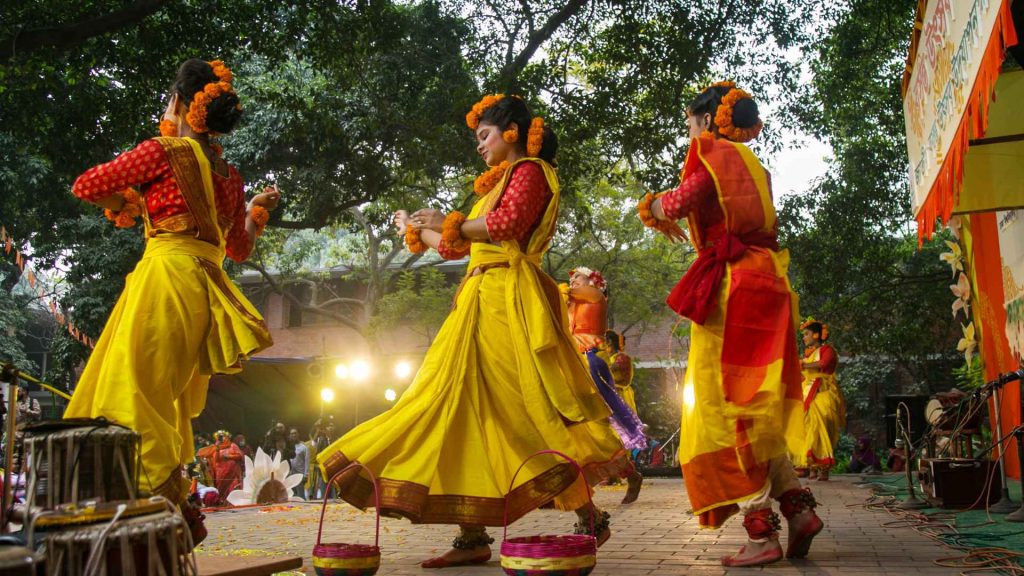
Across Bangladesh, Pahela Falgun unfolds through music, art, fashion, food, and community gatherings rather than formal ceremonies. Public spaces, campuses, and cultural hubs become stages for collective celebration.
Attire of the Day
Local flower markets overflow with Palash, Shimul, and Marigold, which are worn as accessories or used for decoration. Street performances, live music, and informal cultural programs bring neighborhoods to life. Families and friends exchange traditional sweets, take photographs, and participate in communal festivities that reinforce togetherness.
ADVERTISEMENT
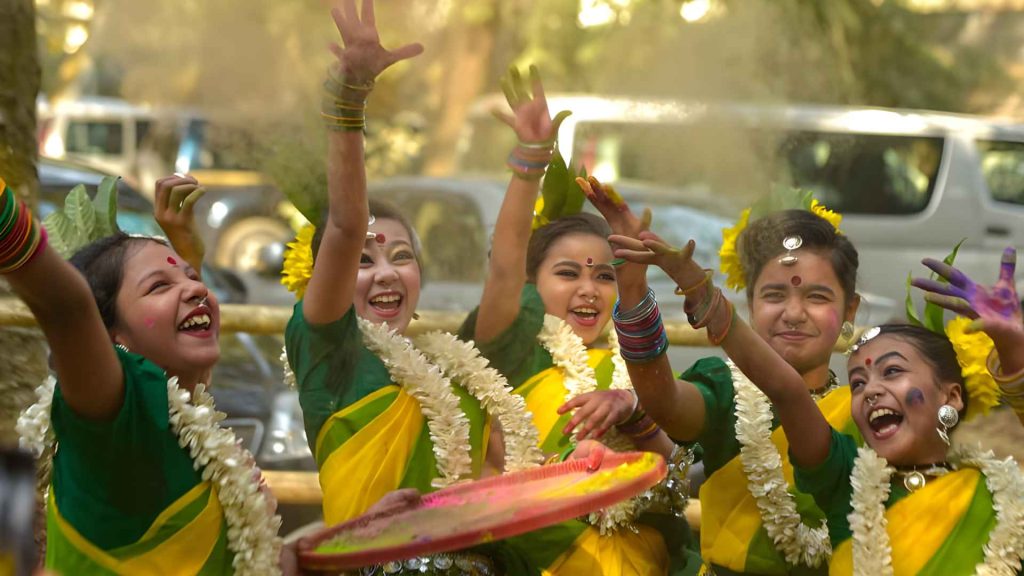
Pahela Falgun is a sensory celebration, where the visual identity is defined by Bashanti yellow and the fiery red of Palash flowers.
On this day, people don Bashanti sarees and Panjabis, embodying the warmth of the sun and the mustard fields of rural Bengal. Women wear floral jewelry, with crowns made of marigolds, while intricate Alpana designs decorate the streets and faces, bringing the vibrant spirit of spring to life.
The sound of the Kokil (Cuckoo) bird marks the arrival of spring, accompanied by soulful renditions of Rabindra Sangeet and Nazrul Geeti. In public spaces like Chayanat, hundreds gather to sing and celebrate, filling the air with joy and unity.
No celebration is complete without food, and during Pahela Falgun, Pitha (rice cake), Khoi (popped rice), and Murala are shared among friends and families, symbolizing the spirit of togetherness. Made from rice, jaggery, and seasonal fruits, these treats, combined with the sweetness of date jaggery, reflect the season’s flavors and the “Sarbojanin” or universal nature of the festival.
From culture to business to global headlines — dive deeper into the stories shaping our community. Discover more at at TINDS.com ✨
ADVERTISEMENT



