Spotlight




For the Bangladeshi diaspora, food isn’t just flavor, it’s memory, heritage, and identity.
It’s how geography is bent, how childhood is re-accessed, and how culture is kept alive despite migration and distance.
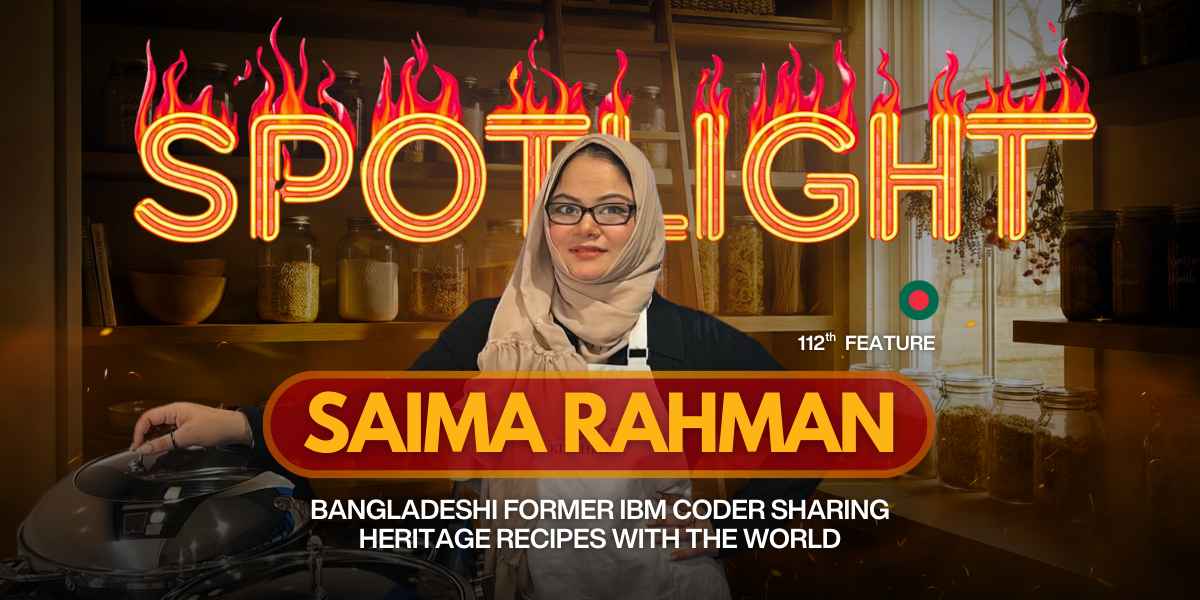
Dhaka-born and NYC-based Saima Rahman, known across platforms as TheHungryCoderr, is engineering that memory for a digital generation raised between cultures. A former IBM full-stack developer, she now decodes Bengali cuisine through logic, nostalgia, and culinary anthropology, turning complex family dishes into bug-free instructions the diaspora can actually follow.
Her mission is simple and radical:
Preserve Bengali food heritage and make it accessible, modern, and diasporic.
| Detail | Information |
| 💫 Category | Food Historian • Culinary Creator |
| 🌍 Identity | Bangladeshi–American |
| 🎯 Mission | Decoding Bengali cuisine for the global diaspora |
| 🎤 Known For | Breaking complex South Asian dishes into accessible steps |
| 👩💻 Previous Role | Full-Stack Developer at IBM |
| 🧠 Creative Angle | Tech logic meets culinary nostalgia |
| 📱 Platforms | Instagram • Github • TikTok |
| 🔗 Blog | The Hungry Coderr Cooks |
ADVERTISEMENT
Saima: Dhaka. It started long before the algorithms. I’d go fishing with my Nana Bhai and cook over a clay stove. Nani’s Nihari and chaotic dawats created my baseline for “good food.”
Saima: I started in Pharmacy and Biology to satisfy the immigrant parental playbook. It didn’t click. Software engineering did! Bootcamp,IBM, stability. I had “made it.” But between commits and deploys, a different passion was compiling. I wanted to engineer joy, not just software.
Saima: I debug dishes. Bengali cuisine can feel intimidating spices measured with intuition. I break them into “bug-free” steps the diaspora can follow.
Saima: Absolutely. For immigrants, food is a bridge. It fills the gap between Dhaka and New York. When someone says, “This tastes like my Nani’s,” that’s everything.
Saima: It’s a one-woman startup. Concept → filming → voiceover → editing → posting. I run the whole production stack.

Saima: Identity. Comfort. Belonging. Food is the fastest download back to childhood.
Saima: I was almost a rockstar. I was in a band called “Minus +2” and we once shared a stage with Arnob.
Saima: The learning curve keeps me alive. Debugging code, tempering spices, navigating slopes- it’s all problem-solving.
Saima: Stop overthinking. Just start. Careers aren’t linear. They loop, iterate, pivot. I didn’t leave tech; I just changed the application.
ADVERTISEMENT
Saima: Be authentic. Work hard. Write down the things you want to see yourself doing. Don’t let self-doubt batch-process your dreams.
Saima: It deserves more visibility. Bengali food is technical, layered, and emotional. It tells our story better than we can explain it.
Saima: Something sweet is coming soon. For now, support the journey by following along, cooking the recipes, and sharing the love.
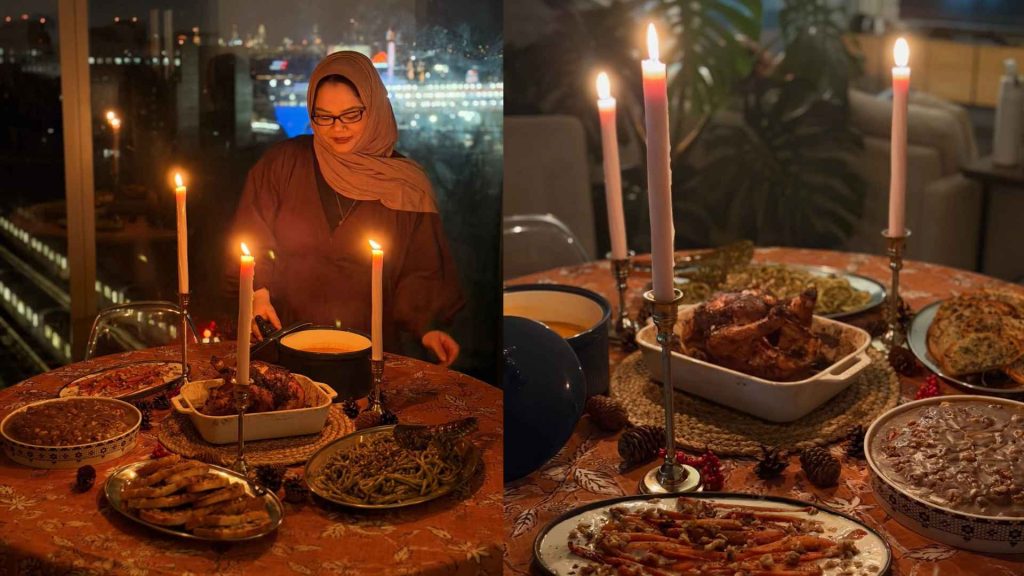
Saima Rahman is proof that heritage doesn’t disappear with distance. It evolves, adapts, and survives through those willing to preserve it.
By blending engineering logic with culinary memory, she turns Bengali food into a diasporic language, one spoken between Dhaka kitchens and New York dining tables.
Missed our last feature? Catch Nayeem Ashraf: Crafting Emotions and Memories in Every Bold Dish.
Read more inspiring South Asian stories on TINDS.COM.
ADVERTISEMENT